
Home › Very low sperm count: is donor sperm the only option, or can ICSI help?
Very low sperm count: is donor sperm the only option, or can ICSI help?
Not always. When the husband's sperm count is very low but live, moving sperm are seen in his semen sample, IVF with ICSI can be tried with his own sperm: in the laboratory, one sperm is injected into each egg. Whether ICSI suits a couple is decided by their doctor after the reports of both partners.
Watch the video (in Konkani)
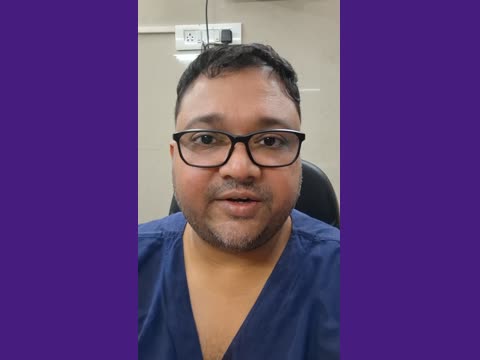
This three-and-a-half-minute video by our consultant is in Konkani. The guide on this page is the same talk, written out in English. Its chapters:
- 0:00 A young couple with a very low sperm count
- 0:54 Is donor sperm the only option?
- 1:02 What we check at the first meeting
- 1:30 IVF with ICSI: an established technique
- 1:49 How ICSI is done
- 2:06 Mechanical and genetic fertilisation
- 2:32 When the sperm are abnormal
- 2:56 Embryos from the husband's own sperm
A young couple with a very low sperm count
Our consultant begins with a teaching case. A young husband and wife, both around thirty, came with one question. The husband's sperm count was around two to three million, well below the normal range. He had been tested seven or eight times, and every report gave roughly the same count. His other reports were within the limits for going ahead with treatment.
Over time the couple had consulted one, two or three fertility centres. Each time, they had been told that donor sperm was the only option left to them.
Is donor sperm the only option?
That is the question the couple brought, and the question this video answers. Donor sperm is one option that some couples are told about. But when live, moving sperm can be found in the husband's semen sample, even in small numbers, many couples with a very low sperm count can try for a child with the husband's own sperm, through IVF with ICSI. Whether that is right for a particular couple is decided only after their reports have been seen.
What we check at the first meeting
At the first meeting, our doctor looks at the couple as a whole, not at one report alone:
- The semen reports: how many sperm are seen, how many of them move and how they are shaped, and whether repeated tests agree.
- The wife's reports, because the plan depends on her tests as much as on his.
- General health: diabetes and any other health problem are asked about and looked into, since they matter for treatment and for pregnancy.
For this couple, all the tests had already been done, and the reports were within limits. What remained was the decision about the sperm. With a very low count, the doctor may also advise hormone tests and, where indicated, genetic tests, because some genetic causes of a low count can be passed on to a son through ICSI. That is explained before any decision is made. What each test shows is on our page about fertility tests for couples, and the causes of a low count are on our male infertility page.
ICSI treatment: an established technique
In cases like this one, where live, moving sperm are seen in the sample, IVF with ICSI is the treatment our consultant discusses. ICSI stands for intracytoplasmic sperm injection. He stresses that it is not a recent development: it is a common, well-established laboratory technique that has been in use for many years.
How is ICSI done?
Our consultant explains it with a simple picture. In IVF, the wife's eggs are collected and taken to the laboratory. With ICSI, the embryologist picks up a single sperm from the husband's sample and injects it into each egg with a very fine needle, under a microscope. Getting the sperm inside the egg, which in nature the sperm has to manage on its own, is achieved mechanically.
The rest is an ordinary IVF cycle: injections to ripen several eggs, egg collection under light anaesthesia, the embryos growing in the laboratory, and the transfer of an embryo into the womb. Each step is explained on our IVF treatment page.
Mechanical fertilisation and genetic fertilisation
Here our consultant makes the point he calls important. Placing the sperm inside the egg is only mechanical fertilisation, and it does not mean that a baby is assured. After the injection, genetic fertilisation still has to take place inside the egg, when the genetic material of the sperm and of the egg come together. Only after that does an embryo form and begin to grow.
So ICSI helps the sperm reach the inside of the egg. It cannot make genetic fertilisation or the growth of the embryo happen; those still depend on the quality of the sperm and of the egg.
When the sperm are abnormal
If the sperm are of poor quality or abnormal, genetic fertilisation may not go well. The eggs may then fail to fertilise, the embryos may be of low quality, or no embryo may form at all. That is why a cycle can stop before an embryo transfer, and why the result of ICSI cannot be known in advance. If an earlier transfer has not led to a pregnancy, our page on repeated IVF failure sets out what is looked at again.
Embryos from the husband's own sperm
Even so, our consultant's message is that the effort is worth thinking about. He explains that many couples with a very low count do develop good-quality embryos with the husband's own sperm, and that some of them can become parents this way. Nobody can say beforehand whether this will happen for a particular couple.
The technique is available, and in his view it is worth discussing with every couple who wish to have a baby with the husband's own sperm. Donor sperm remains a separate choice, which a couple makes only after understanding their own reports.
What does IVF with ICSI cost?
On our price list, IVF with ICSI is ₹2,10,000 and IVF without ICSI is ₹1,60,000 (price list: October 2026). Whether ICSI is needed depends on the semen report. What each price covers is set out on our IVF cost page. EMI facility is available.
Your next step
If the husband's reports show a very low count, bring all of them, old and new, and the wife's reports to your first consultation. Call or WhatsApp us to book.
About this guide
This guide is by the Heartbeats IVF team. It follows the Konkani video by our consultant, written out in English. It is for education only and is not personal medical advice: your own treatment is decided by your doctor after examining you and reading your reports.
Questions couples ask about ICSI
Is donor sperm the only option when the sperm count is very low?
Not always. If live, moving sperm are seen in the husband's semen, IVF with ICSI can be tried with his own sperm. Donor sperm is one option some couples are told about; the choice is made only after the reports of both partners have been seen.
What is ICSI treatment?
ICSI (intracytoplasmic sperm injection) is a step in an IVF cycle. In the laboratory, the embryologist injects a single sperm into each egg with a very fine needle under a microscope. It is an established technique, not a new one.
Does ICSI mean the egg will surely fertilise?
No. Injecting the sperm is only the mechanical step. Genetic fertilisation and the growth of the embryo must still follow, and they depend on the quality of the sperm and the egg. With abnormal sperm, the embryos may be of low quality, or may not form.
What is checked before ICSI is advised for a very low sperm count?
The semen reports, repeated where needed, the wife's tests, and general health such as diabetes. With a very low count, hormone tests and, where indicated, genetic tests may be advised, because some genetic causes can be passed on to a son through ICSI.
How much does IVF with ICSI cost?
IVF with ICSI is ₹2,10,000 and IVF without ICSI ₹1,60,000 (price list: October 2026). ICSI is added only when the semen report shows it is needed.
Your visit is confidential — nothing about you appears on this website or on social media.
What you read here explains fertility care in general terms and cannot replace a consultation. Decisions about your own care should be made with a doctor who knows your history and has seen you. We do not carry out or offer sex determination of any kind, which is prohibited by law in India under the PCPNDT Act.