
Hysteroscopy in Goa: the womb camera, done awake or under anaesthesia
Part of our guide to gynaecological surgery in Goa.
In a hysteroscopy, a slim camera is guided through the vagina and cervix so that the cavity of the womb appears on a screen, and the tummy is not cut. A short diagnostic check often needs no anaesthetic at all; longer treatment, such as removing a fibroid, is done with one. Almost everyone leaves on the same day.
Hysteroscopy is used to find the cause of abnormal bleeding, to check the cavity before fertility treatment, and to treat what it finds. This guide covers what it can show, how it feels, when in the cycle it is done, the recovery and the risks.
What a hysteroscopy can find and treat
| Finding | What it is | What is usually done |
|---|---|---|
| A polyp | A soft overgrowth of the lining | Removed in the same sitting and sent for testing; see endometrial polyp removal |
| A fibroid in the cavity | A fibroid that bulges into the inner space of the womb | Shaved away through the camera; a larger one may need two sittings; see submucosal fibroid removal |
| A septum | A dividing band of tissue that the womb was born with | Divided through the camera in selected women after miscarriages or failed transfers; the benefit is debated, so it is weighed case by case |
| Scar tissue (adhesions) | Bands that join the walls after an earlier procedure on the womb or an infection | Cut through so the lining can regrow; see thin endometrium |
| A thickened lining or unexplained bleeding | Lining that looks thick or uneven on the scan | A sample (biopsy) taken from the right spot, under direct view |
Awake or under anaesthesia?
A diagnostic hysteroscopy, and the removal of a small polyp, can often be done awake. A very slim camera is used, usually without any instrument to hold the cervix open, and sterile fluid gently opens the cavity. Most women feel period-like cramps for a few minutes, and a pain tablet taken an hour before helps. If it becomes uncomfortable, the check stops when you ask.
An anaesthetic is used for longer treatment, such as a larger fibroid, a septum or scar tissue, and for any woman who prefers to be asleep. It is usually a short general anaesthetic, and you still go home the same day in most cases.
When in the cycle it is done
The check is normally arranged in the few days after a period has finished, before the egg is released: the lining is at its thinnest then, which gives the clearest picture. You may be asked for a urine pregnancy test on the day. After menopause, any day suits. If you are bleeding heavily on the planned day, the check may be moved, because blood blurs the view.
Before and after
- Before: bring your scan reports and a list of medicines. An unusual discharge is checked for infection first, and a light meal is fine if you are having it done awake.
- Straight after: mild cramps settle within a few hours. Some spotting or a watery loss can follow for several days; this is expected.
- The next days: most women are at work again the following day. Tampons and intercourse usually wait until the bleeding stops.
- Results: what was seen is explained before you leave; a biopsy report usually follows within one to two weeks.
Let us know that day if a fever develops, bleeding becomes heavy, pain builds instead of fading, or a discharge smells bad.
Risks
Serious problems are uncommon. The possible ones are infection; bleeding; a small puncture through the womb wall (perforation), which usually heals by itself but sometimes needs a laparoscopy to check; and, during longer operations, too much fluid being absorbed, which the team watches throughout. Occasionally a tight cervix means the check cannot be completed awake and is repeated under anaesthesia.
Hysteroscopy and fertility
Not every couple needs a hysteroscopy before IUI or IVF; it is advised when the scan, the history or failed transfers point to the cavity. Who needs which before treatment is covered under hysteroscopy and laparoscopy for infertility, and pregnancy after hysteroscopy gives the usual wait before trying or a transfer.
Watch in Konkani: the inner and the outer view
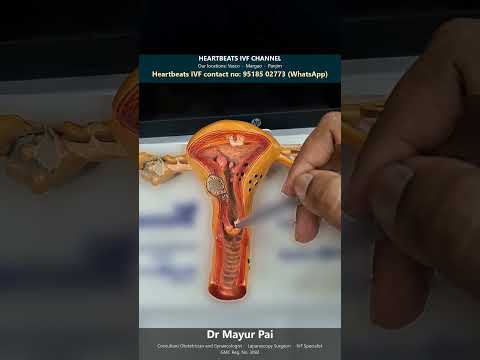
Our short Konkani video (about a minute) shows what the womb camera sees from within, including where each tube opens, and what a laparoscopy sees from outside.
Where can I consult, and where is it done?
Your first visit can be at whichever of our clinics suits you; the contact page gives their hours. Hysteroscopy, including a short check without anaesthesia, is done in Goa. Please bring earlier scan reports and any notes from previous procedures on the womb. APPOINTMENTS ARE COMPULSORY FOR DOCTOR CONSULTATION.
Questions about hysteroscopy
Is a hysteroscopy painful?
Done awake, most women feel period-like cramps for a few minutes; a pain tablet beforehand helps, and the check stops if you ask. Under anaesthesia you feel nothing during the procedure, and the cramps afterwards are usually mild.
How long does a hysteroscopy take?
A diagnostic look usually takes about 10 to 15 minutes. Treatment, such as removing a fibroid or dividing a septum, can take 30 to 60 minutes.
Is a hysteroscopy a day procedure?
Yes. Nearly all women leave within a few hours, even after a short anaesthetic.
Is a hysteroscopy the same as a laparoscopy?
No. A hysteroscopy sees the cavity from below, through the cervix, without any cut. A laparoscopy sees the womb from outside, together with the tubes and ovaries, through small openings in the tummy. Sometimes both are done in one sitting; see laparoscopic surgery.
When can I try to conceive after a hysteroscopy?
Usually soon. After a look alone, the following cycle is often fine; when tissue has been removed or divided, one to three cycles of healing are usual. The usual wait is set out in pregnancy after hysteroscopy.
Where can I consult, and where is the hysteroscopy done?
You can consult at whichever of our four clinics suits you: Panjim, Margao, Mapusa or Vasco. Hysteroscopy is done in Goa, and a short check without anaesthesia is often possible.
Your visit is confidential — nothing about you appears on this website or on social media.
What you read here explains fertility care in general terms and cannot replace a consultation. Decisions about your own care should be made with a doctor who knows your history and has seen you. We do not carry out or offer sex determination of any kind, which is prohibited by law in India under the PCPNDT Act.